Types of Skin Cancer and Ways to Treat It

May 2, 2022

Anyone is at risk of skin cancer but there's higher risk for those with fairer skin complexion, increased sun exposure and history of indoor tanning. Genetics plays an important role. If you have a history of skin cancer in the family you are put at a higher risk, specifically a first degree relative with history of melanoma.


There are several types of skin cancer. However, the main three types that we most commonly see are basal cell carcinoma, squamous cell carcinoma and malignant melanoma. These cancers are caused by atypical and uncontrolled growth of different types of cells that make up the layers of the skin.


The type of skin cancer an individual can get is determined by where the cancer begins. Here is more information to help you identify any skin cancer concerns you may need to address with your dermatologist.


The Big Three


1.     Basal Cell Carcinoma – BCC is the most common form of skin cancer - yet the least aggressive - with the appearance of a flesh colored, pearl-like bump or pinkish patch of skin.


Where is can appear? BCC frequently develops in people who have fair skin. People who have skin of color also get this skin cancer. It is common on the head, neck, and arms; however, they can form anywhere on the body, including the chest, abdomen, and legs.


What to do? If you suspect that you or a loved one has BCC, consult a dermatologist to evaluate the lesion on the skin and begin appropriate treatment, which, is done with either a small surgery or image-guided superficial radiotherapy to remove the lesion and eliminate all the affected cells. Early diagnosis and treatment for BCC are important. It can grow deep and if allowed to grow, it can penetrate the nerves and bones, causing damage and disfigurement.


NOTE: BCCs usually develop after years of frequent sun exposure or indoor tanning.


2.     Squamous Cell Carcinoma – SCC is the second most common type of skin cancer often with the appearance of a red firm bump, scaly patch, or a sore that heals and then re-opens.


Where is can appear? SCC tends to form on skin that gets frequent sun exposure, such as the rim of the ear, face, neck, arms, chest, and back.


What to do? Again, if you suspect that you or a loved one has SCC, consult a dermatologist to evaluate the stain on the skin and begin appropriate treatment, which, is done with either a small surgery or image-guided superficial radiotherapy.    Early diagnosis and treatment can prevent SCC from growing deep and spreading to other areas of the body.


NOTE: Sun exposure is the main cause of SCC, but I can also happen in those who undergo chemotherapy and radiation therapy treatment or have chronic skin problems, such as wounds that do not heal.


3.     Melanoma – Melanoma is the deadliest form of skin cancer and frequently develops in a mole or suddenly appears as a new dark spot on the skin.


Where is can appear? Melanoma can develop most anywhere on your body with the back and lower legs most frequent.
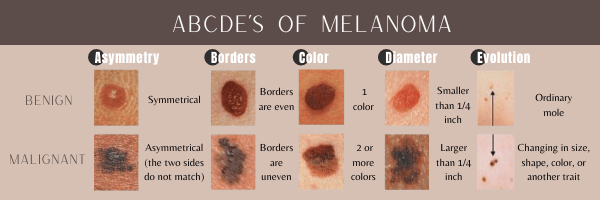
What to do? It is important that dark spots that change over time and have an irregular shape are quickly evaluated by a dermatologist. Treatment starts with surgery to remove the skin lesion, and additional therapies are needed for melanoma that has spread to  the lymph nodes or other organs. Early diagnosis and treatment are crucial. Knowing the ABCDE warning signs of melanoma can help you find an early melanoma. Melanoma can also occur in your mouth, in your eyes and in your genitals so it is important to perform routine screening exams like dental visits, eye exams and OBGYN exams.

Share this article with friends!
By Kari Brogan February 2, 2026
Melasma is a chronic pigmentation condition that causes symmetrical patches of brown or gray-brown discoloration, most commonly on the cheeks, forehead, upper lip, and jawline. While many people associate melasma flare-ups with summer sun exposure, winter is a critical — and often overlooked — season for managing it effectively.  In fact, winter can be one of the best times to get melasma under control when approached correctly.
By Kari Brogan December 23, 2025
The aesthetics industry continues to evolve at a rapid pace, and 2026 is shaping up to be the year of smart, subtle, science-driven beauty . Today’s patients are no longer chasing dramatic transformations or fleeting social media trends. Instead, they’re seeking results that look natural, feel personalized, and support long-term skin health.
By Kari Brogan November 26, 2025
Winter can be harsh on your skin. Dry air, indoor heating, and cold winds make skin more sensitive, which can make using retinol tricky. Retinol is a powerful anti-aging ingredient that reduces fine lines, improves texture, and promotes collagen production—but in winter, it can cause irritation, dryness, and redness. That’s where the Retinol Skin-Sandwich Method comes in.
By Kari Brogan November 4, 2025
At Desjarlais Dermatology & Aesthetic Center, we believe beautiful, healthy skin isn’t achieved through a single treatment or quick fix — it’s the result of a balanced, science-backed approach. That’s why our team emphasizes what we call the “Superfecta” of cosmetic skin health: 1. Routine Dermatological Skin Checks 2. Medical-grade skincare products 3. Laser treatments 4. Injectables Together, these four components work synergistically to rejuvenate, protect, and maintain your skin — delivering results that look natural, youthful, and long-lasting.
By Kari Brogan September 30, 2025
At Desjarlais Dermatology & Aesthetic Center, we’re committed to bringing you the latest, most effective treatments in cosmetic dermatology. That’s why we’re excited to announce the newest upgrade to our patient-favorite Silhouette/IntraGen Facial — the Cynosure/Lutronic XERF system. This cutting-edge technology takes non-surgical facial rejuvenation to the next level with superior precision, comfort, and results.
By Kari Brogan August 27, 2025
Menopause is a natural stage of life, but that doesn’t make the changes it brings any easier. From body shifts and thinning hair to skin concerns like dryness, fine lines, and loss of elasticity, many women find themselves searching for solutions to feel like themselves again. At Desjarlais Aesthetic Center in Adrian, MI, we’re here to help you embrace this chapter with confidence by offering advanced, customized treatments for menopause-related skin, hair, and body changes.
By Kari Brogan August 4, 2025
In the ever-evolving world of cosmetic dermatology, skin rejuvenation treatments are getting smarter, more precise, and more effective than ever. Two standout procedures making waves are micro-coring and microneedling. While they sound similar, they offer distinct benefits – and choosing the right one depends on your skin goals. Let’s break it down.
At Desjarlais Dermatology & Aesthetic Center we understand the emotional and physical impact of mela
By Kari Brogan July 1, 2025
At Desjarlais Dermatology & Aesthetic Center we understand the emotional and physical impact of melasma, and we’re here to guide you through the summer months with smart, dermatologist-approved strategies to prevent flare-ups and protect your glow.
By Kari Brogan May 30, 2025
When most people think about cosmetic laser treatments, they often assume they should hit pause during the sunny summer months. But here’s the truth: you can absolutely continue certain laser treatments during summer — and with the right guidance, timing, and sun protection, you can still achieve glowing, healthy skin without disruption to your routine.
By Kari Brogan March 27, 2025
GLP-1 medications like Ozempic, Wegovy, and Mounjaro have revolutionized medical weight loss, offering an effective way to reduce appetite and promote fat loss. However, these treatments come with potential side effects, including nausea, fatigue, muscle loss, and skin laxity.